The overanalysis of Angine de Poitrine
📝 postIntroduction
If Angine de Poitrine hasn't invaded your Instagram feed yet, then by clicking on any of these clips, it will start following you around the internet. They're a guitar, bass, and drum duo with a style that balances jam-band rock-out fun with more cerebral, less-head-bobbable elements. Internet people call them "microtonal math rock". "Microtonal" refers to the fact that their guitar and bass has extra frets which lets them play notes that aren't expressible on western sheet music. "Math rock" is a genre that involves complex shifting time signatures, like Dream Theater.

In this post I'm trying to unpack why I'm so obsessed with Angine de Poitrine. I've played bass guitar in jam bands off and on over the years, but my regular instrument is French horn. On horn I've played pop tunes in marching band, and have also "played the hits" of the last few hundred years of orchestral repertoire, currently in the Puget Sound Symphony Orchestra in Seattle. For some reason, Angine de Poitrine activates my classical music brain more than my bass guitar brain, and I'm trying to figure out why. So hopefully this blog-post-turned-first-semester-undergrad-music-major-term-paper helps explain why, and maybe therapeutically helps me get this amazing song out of my head for at least a little while.
So buckle up for an overdone explanation of Angine de Poitrine's song Fabienk. I called in for some classical music knowledge help from my brother-in-law-and-professional-orchestra-conductor Edward Leonard, so we'll see if I can get a C- or better on the term paper.
The machinery
YouTube is flooded with explanations of how Angine de Poitrine's songs "work", like by David Bruce Composer who breaks down the beats, or Davie504 who is a funny bassist whose channel I've subscribed to for awhile. It's probably silly to try to do a walkthrough of this in written form, but I'm going to try anyway.
Loopers, phrases, and time signatures
To understand how it works, I should first describe one of the duo's structural constraints - the looper.

There are only two musicians in the band, and yet they have tons of instruments playing at once. This is achieved using a looper - a thing the guitar plugs into that can record on the fly and play back on repeat. The loop is a fixed duration. In the case of Fabienk, it's 14 quarter notes long, at a steady tempo of quarter note at 128 beats per minute. So how does that result in such a unique sound?
The "14 quarter notes" causes an interesting musical effect right away when it comes to phrasing. A "phrase" in music is a connected melody that contains an idea. Like in the alphabet song, "abcdefghijklmnop" forms one phrase. You take a breath at the end, before you move onto the next phrase. When you write out the music for that song, you break up the phrase into "measures" so it's easier to read. The alphabet song is in 4/4 which means there are 4 beats per measure. The beat is a quarter note, which in this case "abcdef" are quarter notes of one beat each, and "g" takes up two beats. So "abcdefg" takes up eight beats, or two full measures. I'll write this out where each character is a beat represented as either a | or a -, where | is the first beat in a measure and - is another beat in the measure. I put "v" on top for each beat because the | and - difference was looking a little confusing. So the alphabet song looks like this:
vvvvvvvvvvvvv
|---|---|---|
abcdefg hijkl - hmm
Wait how do we write out lmno? They're faster! Well every beat can actually be broken down into two. Half of a quarter is "1/8" so these are eighth notes. Here's that written out, "subdivided"
v v v v v v v v v v v v v v v v
|-------|-------|-------|-------
a b c d e f g   h i j k lmnop
There are 16 v's so 16 beats in this alphabet phrase. That's a "normal" phrase that is symmetric. The two halves of the phrase are the same length (8 beats), and there's some balance there that is very familiar. The short break after "g" is the same length as the short length after "p". This phrase ending is clear and leaves you room to take a breath (literally if you're playing a wind instrument). Side note: musicians will sometimes chop phrases in half, making the music sound clumsy and choppy. If you leave the same space after "g" as you do "p", this chops the phrase. But if instead you sing the "g" for longer, sustaining it into the break, then it makes for a nice phrase that builds in the middle and then backs off at the end.
PHRASE ONE                      PHRASE TWO
v v v v v v v v v v v v v v v v v v v v
|-------|-------|-------|-------|-------|
a b c d e f g   h i j k lmnop   Q R S   ...
Where this gets weird in Angine de Poitrine. The looper pattern is 14 beats long, so doesn't really repeat in as natural of a way because it's short by two beats. That makes it so the alphabet song doesn't have room for the letter "p" before the next phrase begins with "q"! You can change the tune to make room for it, but if you keep the same 14 count phrase you'll eventually run out of runway at the end.
PHRASE ONE                  PHRASE TWO                  PHRASE THREE
v v v v v v v v v v v v v v v v v v v v v v v v v v v v v
|-------|-------|-------|---|-------|-------|-------|---| ...
a b c d e f g   h i j k lmnoQ R S   T U V   W   X   Y   &
                            ^ what happened to "p"!?    ^
                                                        ^
                               "and" is supposed to go here,
                            but that's into the next phrase
The weird phrase length is just one of the oddities. The other is that the loop is broken into different time signatures in different parts of the same song. At the start of the song for example, the measures are 7 beats long, where the beat is twice as fast (eighth notes).
First part:       |------|------|------|------   (4 measures of 7/8)
Rock out section: |-------|-------|-------|---   (3 measures of 4/4 and 1 measure of 2/4)
One thing that makes 7/8 is it makes it hard to tap your foot to. The way musicians tend to think about this is to split the measure into 3 beats, but make one of the beats take longer than the others. For example, you might count it like this. Every time you say "one", that's when you tap your foot or bob your head.
v v v  v v v  ...
|------|------|------|------
12121231212123...
Depending on what's happening in the music, you'll change out which of the 3 "beats" is the long one - choosing between 123-12-12 or 12-123-12 or 12-12-123.
Ok whatever. The point is 7/8 is hard to dance or walk to. At a rock concert, it could be awkward to jump up or pound your fist in the air on the beat. The beats are different lengths so you feel like a huge nerd if you try to line it up to the music.
The cool part about the layering that Angine de Poitrine does is that different time signature loops are still compatible with each other. A 4x7/8 loop can play at the same time as a 4-4-4-2 loop because they're all 14 counts long. Or to make it easier to think about with the 7/8 meter - they're always 28 eighth notes long, they're just in different time signatures. So when they blend, they sound SUPER weird and cool.
For example, in the first half, the layering looks like this - 7/8 layered beneath 4-4-4-2. You can hear that in this part of the song. The new melody (the part Khn is playing in real-time on the guitar), and the drums are now in the 4-4-4-2 pattern. But all that cool fast guitar noodling is still present from the previous section, and is still in 7/8! They interact in a very cool way.
|------|------|------|------ (this is the weird syncopated part at the beginning)
|-------|-------|-------|--- (this is the distinct melody in the jam sections)
In the second half, there's no 7/8 layer anymore (at least that I could tell), so it's much more of a steady "rock out", but with the awkwardness of being two bars short of an "alphabet song" style typical phrase. But, there are two different groupings that layer and still make it sound fun. From how I hear it, the solo bass line is 4-4-2-4, whereas that melody that comes back from the first half is still 4-4-4-2. They sneak in that half measure in different places in the phrase, but they still line up when they turn around to the beginning on each loop.
|-------|-------|---|------- (this is the sick baseline that starts the second half)
|-------|-------|-------|--- (here's when the melody from the first half comes back)
Microtones
The second part of unique machinery are microtones. The guitar and bass have extra frets that are closer together than typical guitar and bass. This lets them play in a way that sounds way different than we're accustomed to in mainstream music. It's likely that most music you hear uses notes placed on the "standard western semitone" scale. In this system, you have notes named A, B, C, D, E, F, and G. But there are more than 7 notes. When you put a flat (labeled b) or a sharp (labeled #, which in this case is neither a hashtag, pound sign, number sign, nor a hash sign) in front of these notes, you get a note that's halfway between that note and an adjacent note. For example, B-flat is halfway between A and B. Quarter notes, which I've never seen written, are half-way between a note and its next half step. And yes I know that some notes don't have a half step in between them, I'm just simplifying this because that isn't important here. Do not @ me.
If you're a math person, you might say, "hey aren't there an infinite number of notes between two notes"? After all, the mean value theorem proves that there are. And funnily enough, that pedantic math observation is meaningful here. There are music systems all over the world that define notes in completely different ways. I'm having to google them in order to write this so I'm no expert, but there are a ton - Arabic and Persian Maqam systems, Indian Shruti and Swara, and tons of variations throughout Africa and East Asia.
I don't know what microtone system that Angine de Poitrine guitarist "Khn" uses, but he can play a lot of notes that sound surprising. I noticed sometimes he uses them in a way that sounds like a "bend", where a guitarist bends the string to the side to make it lean a little higher. But instead of bending, he just plays a more precise in-between, sometimes as a passing note just like how a bend takes you slowly between notes but eventually making its way up to the next one. The other way they use the microtones happens more in other songs like Mata Zyklek. This makes me think of music from an Arabic, Indian or East Asian system, but I don't know anything about them other than that they sound cool.
The play-by-play
The beginning of Fabienk has this hyper-syncopated, ascending chromatic line with a fast flutter thing to wind it back to the start of the pattern. Even the drums join in and play the same weird syncopated beat in unison. It's not a melody like from a song you'd hear on the radio, but it's not so abstract that you can't even hum it. If you listen to it 100 times a day like me, you start to feel it. But at first you can't nod your head to it or tap your foot to it because the beat is so hard to find. But when I stop thinking about the notes and the beat, and just think of the tune, then I can get into a trance irregularly head bob where I anticipate where each of the little riffs go.
Next, just when you start to feel comfortable in this already unsettling rhythm: chaos. Everything you thought you understood about the melody gets flipped on its head. The bass enters, and the drums switch to a groove that is very unexpected and difficult to understand. I could not really figure this out, so I had David Bruce Composer's YouTube video explain it to me. It turns out the melody from the very beginning actually had an even more bizarre syncopation than you thought; it's happening ONE SIXTEENTH NOTE later than you think. WHAT IS HAPPENING? This is chaos. Your mind cannot comprehend this chaos. Your only hold on reality is grounded by the melodic fragments that you have been hearing the whole time - they're just not happening when you think they should. What already sounded really hard to play individually and even harder together, I realized is twice as hard. I thought maybe they do some kind of "shift pattern by 1/16th" trick with the looper, but I seriously doubt it. They're super talented musicians.
This chaotic 7/8 syncopation repeats and builds, until you hear their weird alien scream, and then suddenly - relief. You are being rescued by the triumphant introduction of a new melody and new subdivision of the 28 1/8th note loop - a 4-4-4-2 pattern.
I've been trying to pin down why this melody has such a triumphant feeling, like a heroic melody that's here to save the day from the syncopated chaos. But in writing this I think I figured it out. It sounds a lot like the Battlestar Galactica melody. Which, now that I think about it, also has this layered "canonic" style. If you don't believe me, hum the Battlestar melody on top of where the guitar starts, and you'll see that they line up on the same 3 8th notes. Coincidence???
Or better yet, I went ahead and messed with pitch and speed in Ableton and then had my coding agent whip up a nice little web control for you to listen to it yourself:
🎛️ This post has an interactive tool here for blending and pitch-shifting Fabienk against Battlestar Galactica — RSS feeds can't run the audio control, so check it out on the original post.
The satisfying jam loops and builds, but at its peak, the chaotic 7/8 returns. At least this time it's with a less syncopated drum pattern so it's easier to follow. And then - a break. Literally a break - the song pauses for a moment.
Out of the silence, a SICK bass line. After I write this maybe I'll finally dust off my bass to learn this lick. The bass drum beats a repeating quarter note, keeping the beat grounded but not helping you parse the bass line. The first many times I listened to this, I thought the time signature was all over the place because the bass line felt like a set of short thoughts of a few notes each. Over time I realized it's just a 4-4-2-4. Similar to the last groove, but the chopped 2/4 measure is in the middle of the sequence instead of at the end.

Then more of the ridiculousness I'm here for - the aliens do this arm wave thing that reminds me of the wiggly arms the characters have in Adventure Time. I never watched the show and only know it through memes. Who knows if that's what inspired them to do this.
The layers build, giving you more sequences to shift your mind in and out of, and then: the return of the triumphant melody again! What a cool restatement of the melody with a totally different underpinning. Unlike the first half that had a layer of the 4x7/8 sequences, this stacks the 4-4-4-2 melody on top of the 4-4-2-4 bass line. It's less "busy" sounding this time around as a result. And then the guitar adds a harmony on top of itself in a twin-lead, that reminds me of guitar solos in metal songs like Metallica's Master of Puppets. And the microtones start to come in too, but they feel natural because they sound like guitars do when they're purposely bending between notes.

The song ends with the hilarious, weird, distorted alien voice singing thing, which seems perfect. Funny enough they even do the voice thing during interviews apparently, like in this one, where their manager did most of the talking but they spoke for themselves some in their alien squawk language. That's the kind of hijinks I'm here for.
Classical comparisons
The first thing about Fabienk that activated my "classical" brain was how it pieces together "micro melodies". These are melodic snippets, sometimes only 3 notes long that string together but are less connected than an approachable phrase. It's not a lyrics-first song like would play on the radio and get stuck in your head, and yet it's still catchy enough to hum to.
One of the mechanics at play here is that it flips between time signatures, known as "mixed meter" - the concept I really beat to death in the machinery section. It's a style that's used in a bunch of music that I play in orchestra, so it got me making connections between Angine de Poitrine's music and other classical pieces I've played.
One of the early composers to break from the familiar, steady time signatures, was Stravinsky. One of the more famous pieces is Rite of Spring. Notice how chaotic that is. It uses mixed meter, dissonance (clashing notes), and there's often no lyrical melody. Instead of lyrical melody, he uses cells, which are a small group of a few notes, that he stitches together in what is called "block form". (No I didn't know those terms before, I was just searching for what they're actually called for this blog post.) And yet it can still get into your head. This was so radical and provocative at the time in 1913, that when this piece (accompanying a ballet) was premiered, the audience rioted - yelling, throwing stuff at the stage, and even fighting each other until the police came.
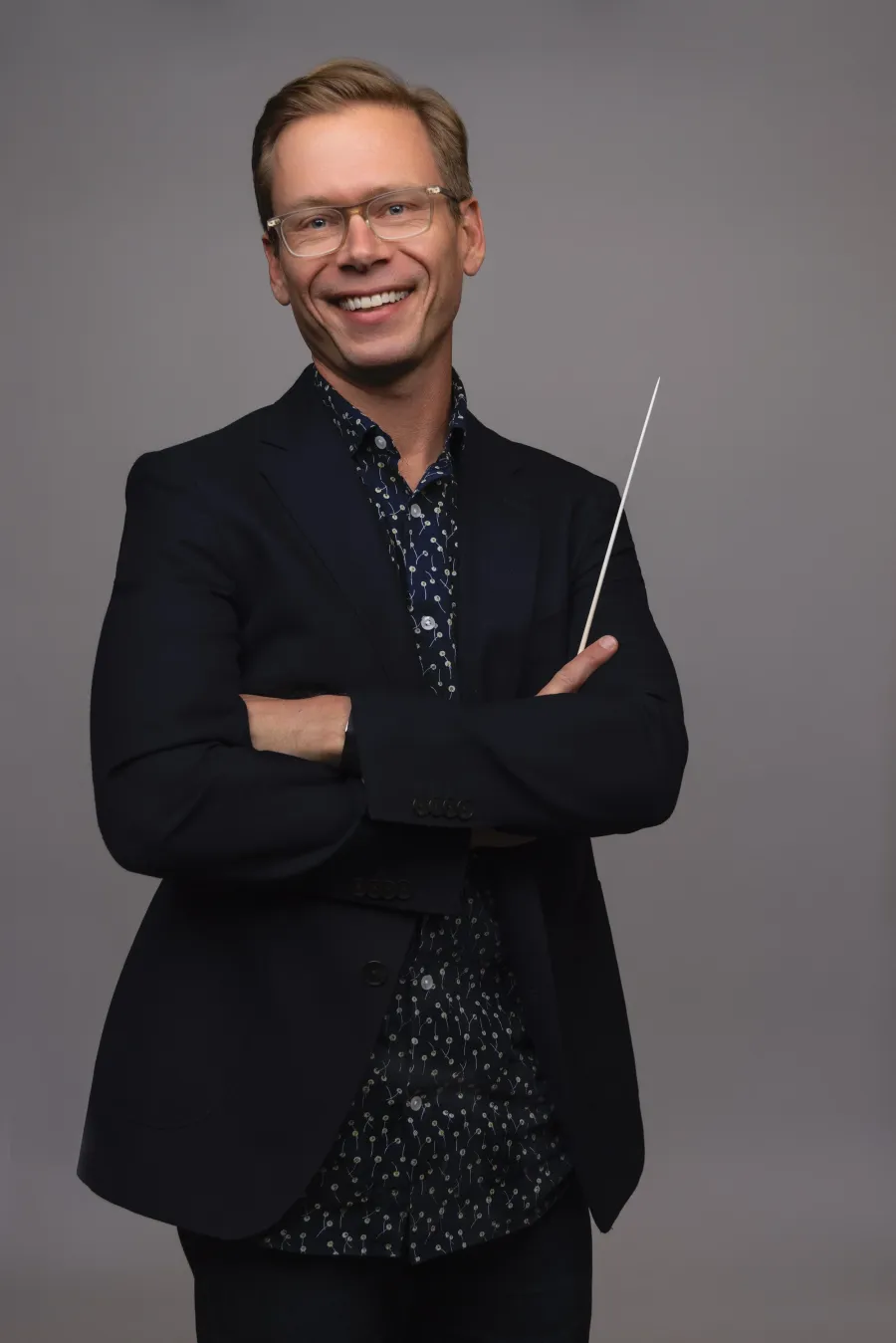
This historical anecdote might sound smart if you're not an orchestral musician, but the truth is that I don't have a real music history education. For all I know, to "real" orchestra nerds, this Rite of Spring comparison could be a pretty lukewarm, cliche take. So I thought I'd get a more informed opinion from a professional musician, so I texted my brother-in-law-and-professional-orchestra-conductor Edward Leonard, who is founder and Music Director of the Chamber Orchestra of Pittsburgh and has been guest conductor with orchestras around the US.
And sure enough, Angine de Poitrine had already invaded Edward's Instagram too, and he had some ideas! I asked Edward about which classical composers or genres Angine de Poitrine resembles.
For my Stravinsky take, Edward pointed me more toward The Soldier's Tale as a closer comparison, which I hadn't heard before. And sure enough - there are lots of bursts of melodies in there. Sometimes there are steady "walking" rhythms (I guess the soldier is marching or something) and other times it's unpredictable and irregular. The narration threw me - I don't think I've been to a narrated performance before.
One comparison Edward drew is to Bach. He called Angine de Poitrine "canonic", since it repeats over and over with evolving variations. So it's kind of like Pachelbel's Canon in D, which you might have heard at weddings, or learned if you play piano (at least those are my own relationships to the piece). It's made up of a bunch of layers of repeating lines that are introduced one by one and stack on top of each other throughout the piece.
Edward pointed me to Steve Reich's Clapping Music as an interesting example of this layering. It involves two people, each clapping a different rhythm at the same time. One part repeats exactly, while the other one morphs throughout the piece. Sounds super hard to do.
Edward also drew a similarity to minimalism. And wow that makes a lot of sense. A Los Angeles Chamber Orchestra blog post defines minimalism succinctly:
..."minimalism" refers to music that often features short phrases repeated a large number of times or that may gradually go through a process of change or transformation. There is routinely a steady pulse in pieces like these, and there is not necessarily a harmonic goal, so the music becomes more about the process rather than traditional harmonic language, or narrative or representative stories.

My favorite minimalist composer is John Adams, who has been described as a "minimalist bored with minimalism". I first encountered Adams in PSSO where we performed Short Ride in a Fast Machine and The Chairman Dances. We got through it ok, but when I heard the Seattle Symphony (the pros) perform Short Ride, my jaw was on the floor the entire 5 minutes. (Here's BBC Symphony Orchestra performing it). Something about this genre of music makes my brain very happy - which now makes total sense that I'd be drawn to Angine de Poitrine.
Like Fabienk, Short Ride is deceptively complicated to play. At times some instruments are playing essentially in a different time signature than others, and frequently with different syncopation than the others. And the melodic snippets or phrases can be short and not particularly intuitive or memorable. In theory us musicians deal with complex rhythms by being super precise, subdividing measures, and anticipating an exact entrance according to the math. But I admit that with complex syncopations and cells like in Short Ride, I end up getting through it because I am in the "groove", putting the little "riffs" in the right places to fit in with the orchestra. That might be the point where the collection of notes turn into music. It's that same feeling in Fabienk where these micro "licks" turn into melodies even though they're not lyrical in a traditional way. I guess they're also using block form!
So yeah, I see why Edward labeled Fabienk by Angine de Poitrine as minimalistic. Steady pulse? Check. It's driven by a pulse in both in the hyper-syncopated parts, and in the rock-out sections, just like the wood block in Short Ride in a Fast Machine. Short phrases gradually transforming? In a sense. It's cool how that original Battlestar Galactica-esque "triumph melody" returns in the second half on top of a different foundation of the new bass groove, vs the first half's different layering.
Conclusion
There's a lot going on in Angine de Poitrine's songs. The musicians Khn and Klek are extremely talented and creative. Parts of their songs are super cerebral and takes a lot of concentration to follow what's going on. But you can also turn off your brain and just enjoy the emergent complexity that rises from layering of loops, even more complex sounding as they layer different time signatures on top of each other. But they don't only stick to that complex stuff. They also pay off your concentration on the more complex parts by rewarding you with that fun jam-band sound that rocks out.
If you think it's neat to unpack music and find its hidden complexity or intent, check out this deep dive on The Matrix score on the Sideways channel. It totally blew my mind to learn about what the music was doing to me subconsciously while I was watching this amazing movie. That breakdown was actually a retelling of a PhD dissertation by Christopher James Heckman Taking the Red Pill: An Analysis of Don Davis' Score for The Matrix Volume. So check that out the long-form if you want to see how deep the rabbit hole goes.
And yes I have tickets to see them in Seattle in December. They'll be here this August too, but I'm not a huge music festival person, so I'll wait where I can sit down in chairs. Now that I think about it though, I bet I'll end up with FOMO for being down on the floor with everyone who's dancing and getting into the band's super fun antics, from this triangle symbol, to doing squats for some reason. Of all the concert video clips that sail by on my Instagram feed, and in all of the subreddits I flip through, the Angine de Poitrine following seems wholesome and fun. I love how things that are fun and goofy bring out the best in people and attract friendly people, from the multitude of online communities that have popped up around my favorite Star Trek podcast, The Greatest Generation, to the Phish-like following that Angine de Poitrine is starting to spin up. It's fun to be around people who are both having fun, and who want you to have fun too.